
Deer, Elk and Moose
Deer
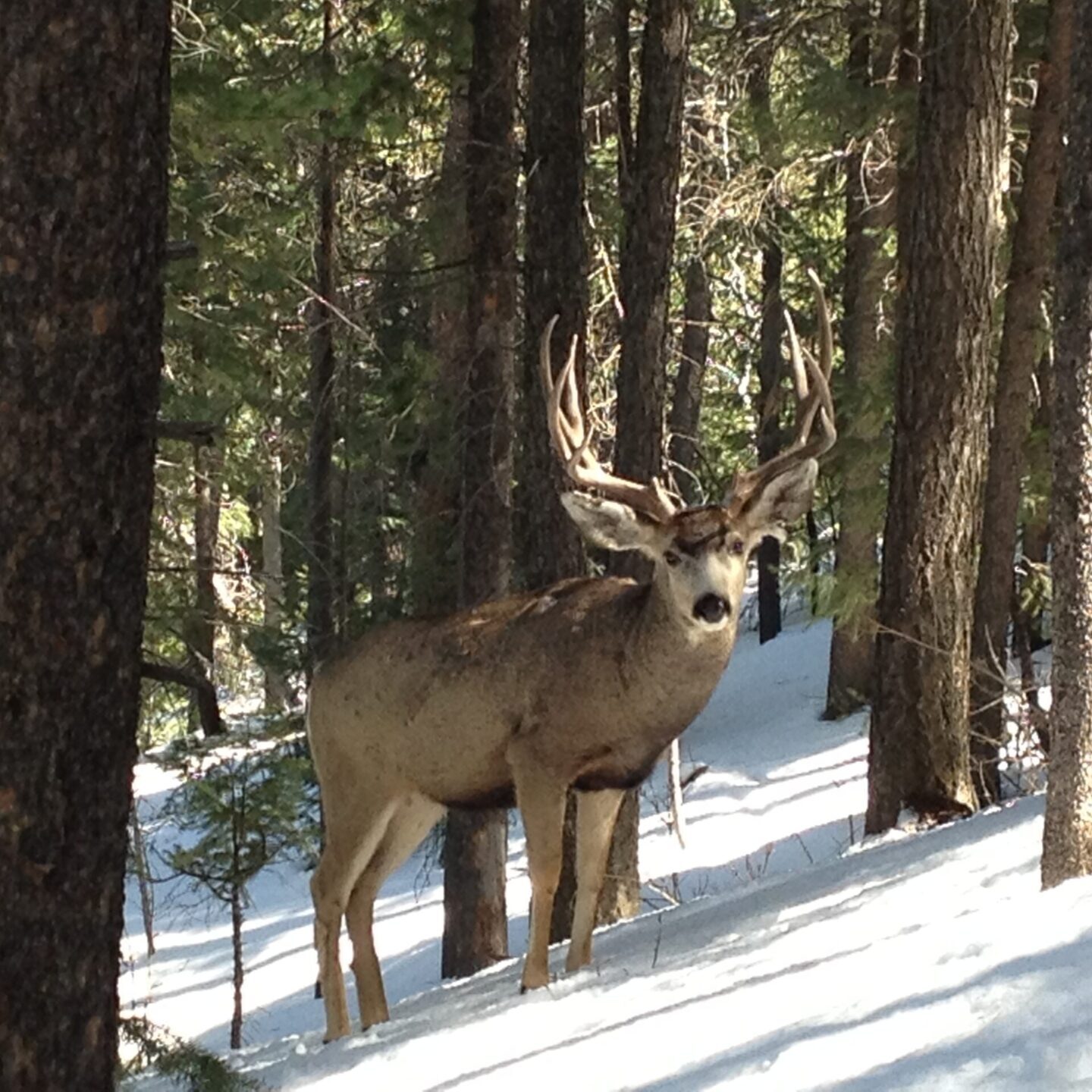
In Colorado, the mule deer is the most commonly encountered deer species, as it is well adapted to the region’s high-elevation forests, open meadows, and rugged terrain. Mule deer are easily recognized by their large ears, black-tipped tail, and distinctive bounding gait known as “stotting.” In the summer season, they range higher into alpine and subalpine areas to take advantage of abundant vegetation, while in winter they migrate to lower elevations and often move into residential neighborhoods in search of accessible food and shallower snow.
Elk
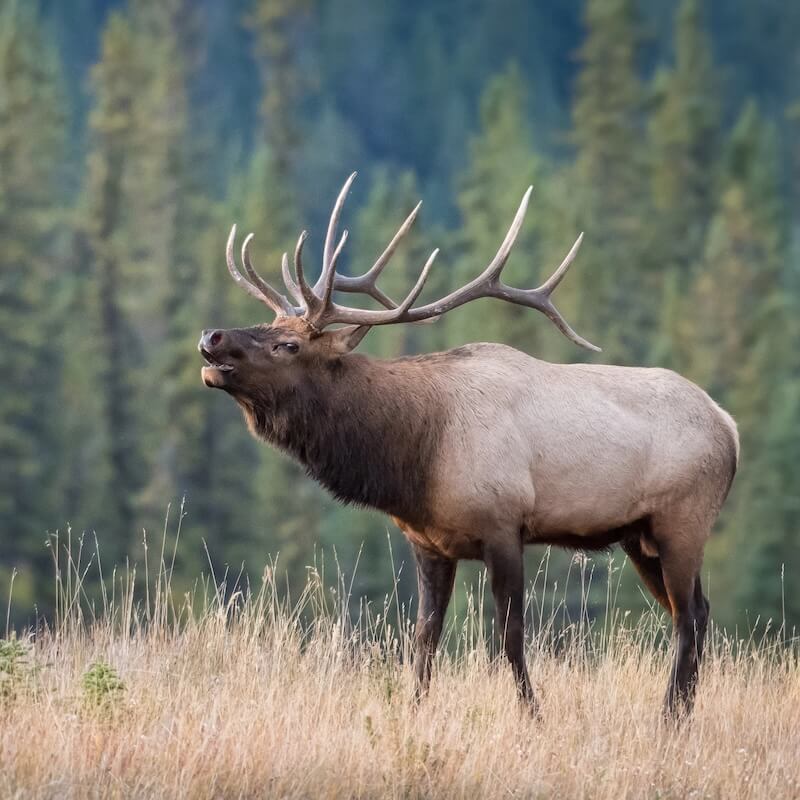
Elk are one of the most iconic large mammals found in Summit County. They inhabit a range of environments across the county, including dense conifer forests, open parks, and alpine meadows, migrating seasonally between higher summer ranges and lower wintering areas to avoid deep snow and forage. Elk are typically seen in herds, especially cows and calves, while mature bulls are often solitary outside of the fall rut. During autumn, the bugling calls of bull elk echo through the valleys as they compete for mates, making this one of the most notable wildlife events in the region. Their large size, tan bodies, dark necks, and sweeping antlers on males make them easy to distinguish from the smaller and more common mule deer.
Moose
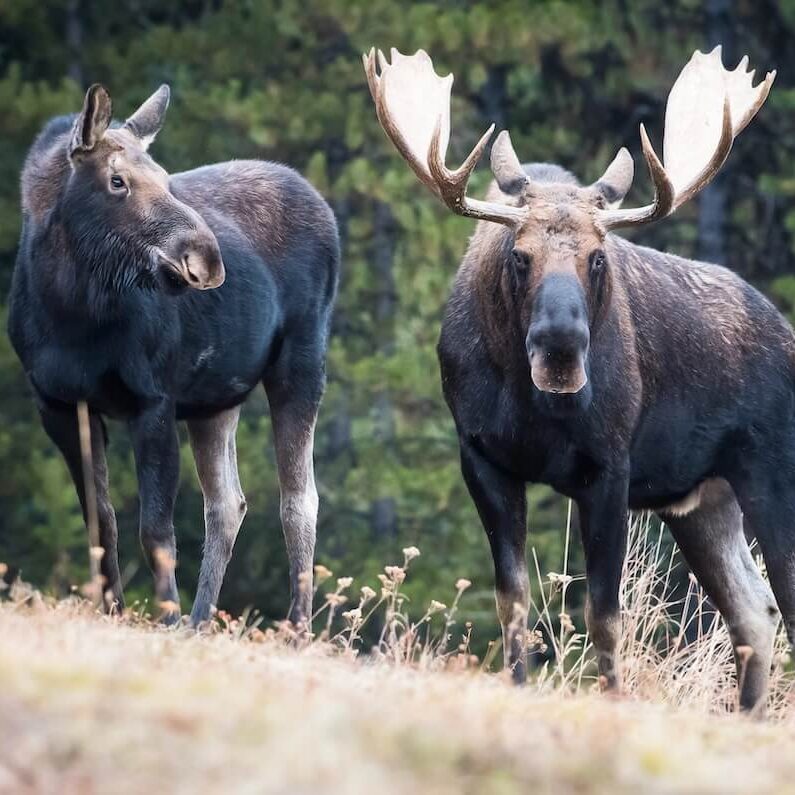
If you encounter a moose while hiking, it’s crucial to remain calm and take cautious measures to ensure both your safety and the well-being of the moose. Keep a respectful distance and avoid making sudden movements or loud noises. Additionally, be aware of your surroundings, and if possible, choose an alternative route to avoid any potential confrontation. If the moose appears agitated or displays aggressive behavior, create as much distance as possible by slowly and carefully backing away without turning your back on the moose. In the event of being charged by a moose, get behind a tree and keep the trunk between you and the animal. Always prioritize the safety of both you and the wildlife by practicing responsible and considerate behavior in their habitat.
 English
  Spanish
  French