
Aves Rapaces
In the pristine landscapes of Summit County, one can witness a variety of birds of prey, including red-tailed hawks, golden eagles, and the occasional peregrine falcon. To protect their habitats, staying on designated trails and minimizing disturbances is imperative. Avoiding the introduction of non-native plants and ensuring proper waste disposal are essential steps to safeguard these magnificent birds and their habitats for generations to come.
Osprey
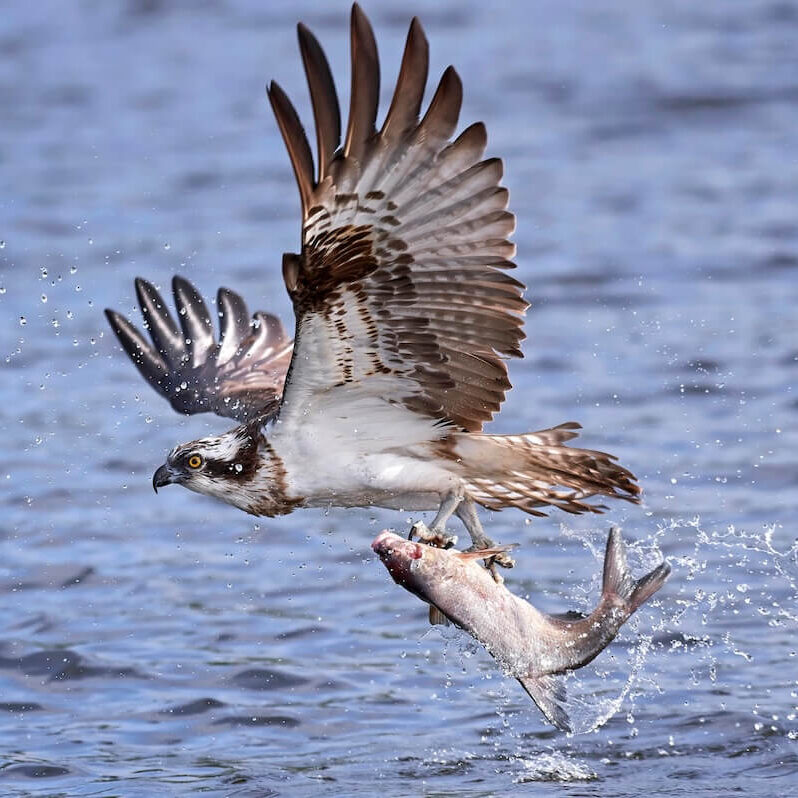
Osprey are a seasonal summer raptor in Summit County, commonly seen around lakes, reservoirs, and slow-moving rivers such as Dillon Reservoir and the Blue River. These fish-eating birds of prey are easily identified by their white underparts, dark eye stripe, and long, angled wings, which give them a distinctive silhouette in flight. Ospreys migrate to the region in spring to breed, often building large stick nests on tall trees, cliffs, or man-made platforms near water. They hunt by hovering over the surface before plunging feet-first to grasp fish with specialized, reversible outer toes and sharp talons. By early fall, most ospreys leave the high country and migrate south to warmer coastal and tropical regions for the winter.
Red-tailed Hawks
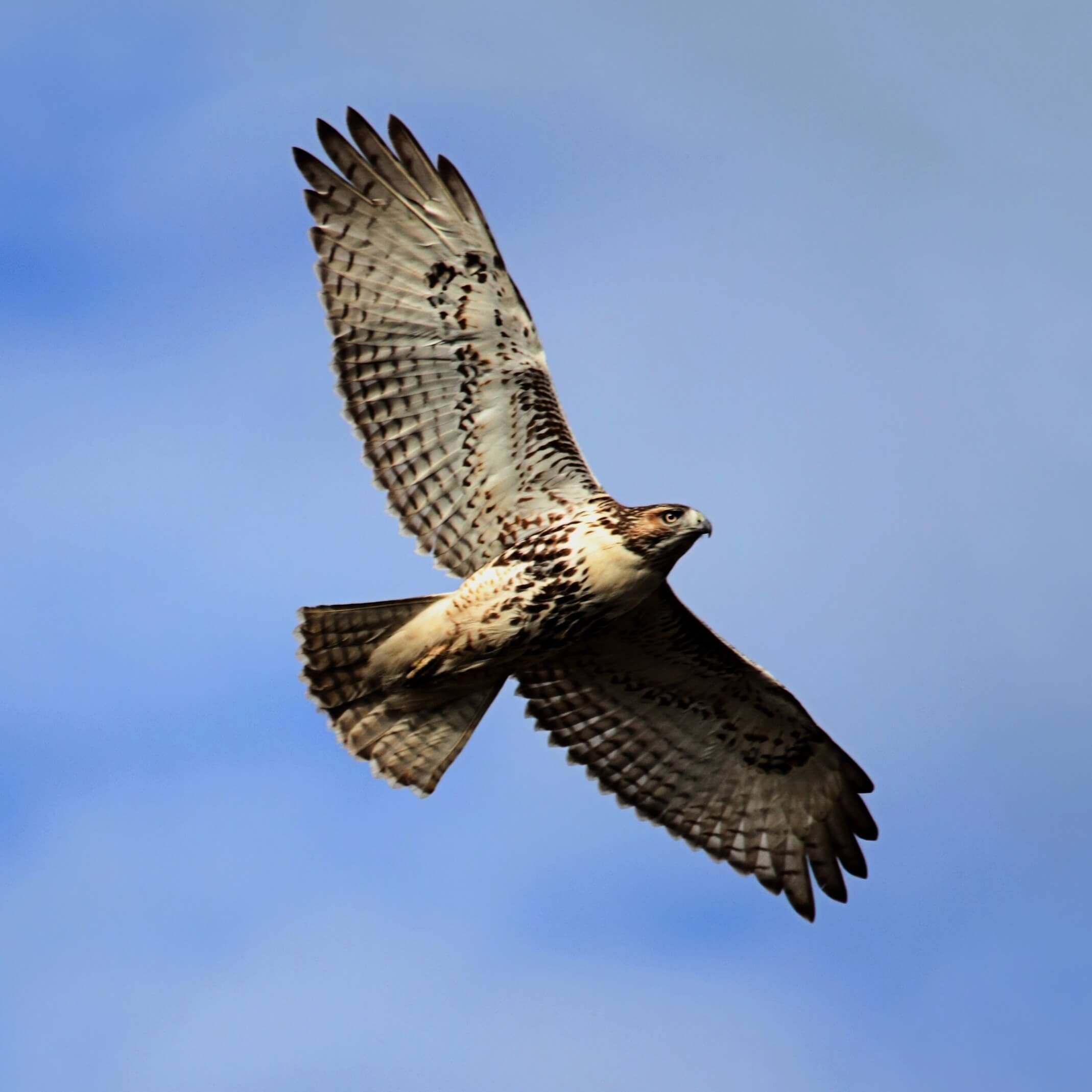
Red-tailed hawks are among the most common and widely observed raptors in Summit County. They inhabit a variety of landscapes, including open meadows, forest edges, and roadside corridors, where they can often be seen perched on fence posts, trees, or utility poles scanning for prey. Named for the rusty red tail visible in adult birds, red-tailed hawks have broad wings and a characteristic soaring flight, frequently circling on thermal currents high above valleys. Their diet consists mainly of small mammals such as voles, mice, and ground squirrels, making them an important natural controller of rodent populations.
Bald Eagle
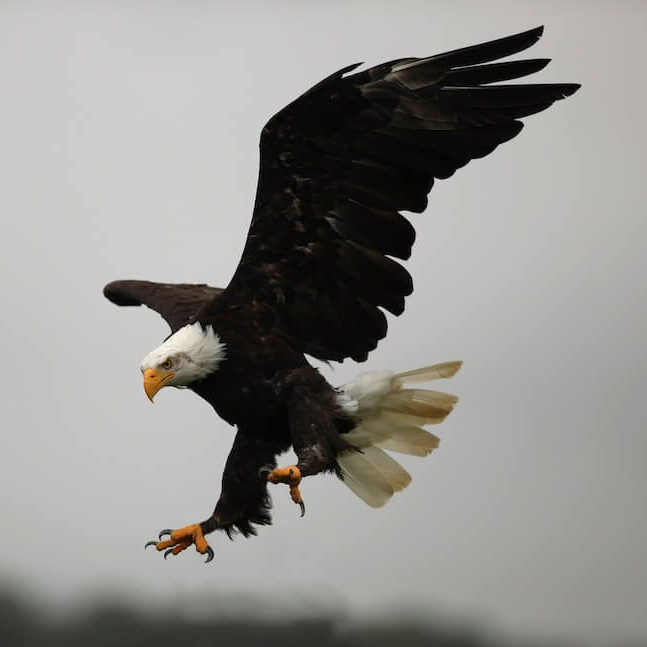
Bald eagles are year-round residents in parts of Summit County, most often seen near large bodies of water such as Dillon Reservoir and Green Mountain Reservoir. As North America’s largest native bird of prey, bald eagles are recognizable by their broad wings, dark brown body, and, in adults, the distinctive white head and tail. They rely heavily on fish but will also scavenge or hunt waterfowl and small mammals, especially during winter when water sources are iced over. Bald eagles typically nest in tall trees or on cliff ledges close to water, and their increasing presence in Summit County reflects successful conservation efforts and improving habitat conditions across the region.
 Spanish
  English
  French